
Caring for a senior loved one is one of life’s most meaningful responsibilities, but it can also become overwhelming. When the physical and emotional demands of caregiving exceed your ability to cope, caregiver burnout develops, leaving you exhausted, stressed, and unable to provide the best care possible.
Recognize the Warning Signs
Understanding when you’re approaching burnout is the first step toward managing it effectively. Many caregivers ignore early symptoms, thinking they’re just part of the job.
Physical symptoms include:
- Chronic fatigue and exhaustion
- Frequent headaches or muscle tension
- Changes in appetite or sleep patterns
- Getting sick more often than usual
Emotional and mental signs involve:
- Feeling overwhelmed or constantly worried
- Irritability with your loved one or others
- Loss of interest in activities you once enjoyed
- Feelings of guilt, resentment, or hopelessness
If you’re feeling overwhelmed by your caregiving responsibilities, you don’t have to manage everything on your own. The type of home care Frederick seniors need can vary. Some need assistance a few hours a day, while others require more extensive around-the-clock assistance. At Assisting Hands Home Care, we tailor our care plans based on each senior’s individual care needs, and the plans can be adjusted at any time. We are a trusted provider of respite and 24-hour care, and we also offer specialized Alzheimer’s, dementia, Parkinson’s, and stroke care for seniors.
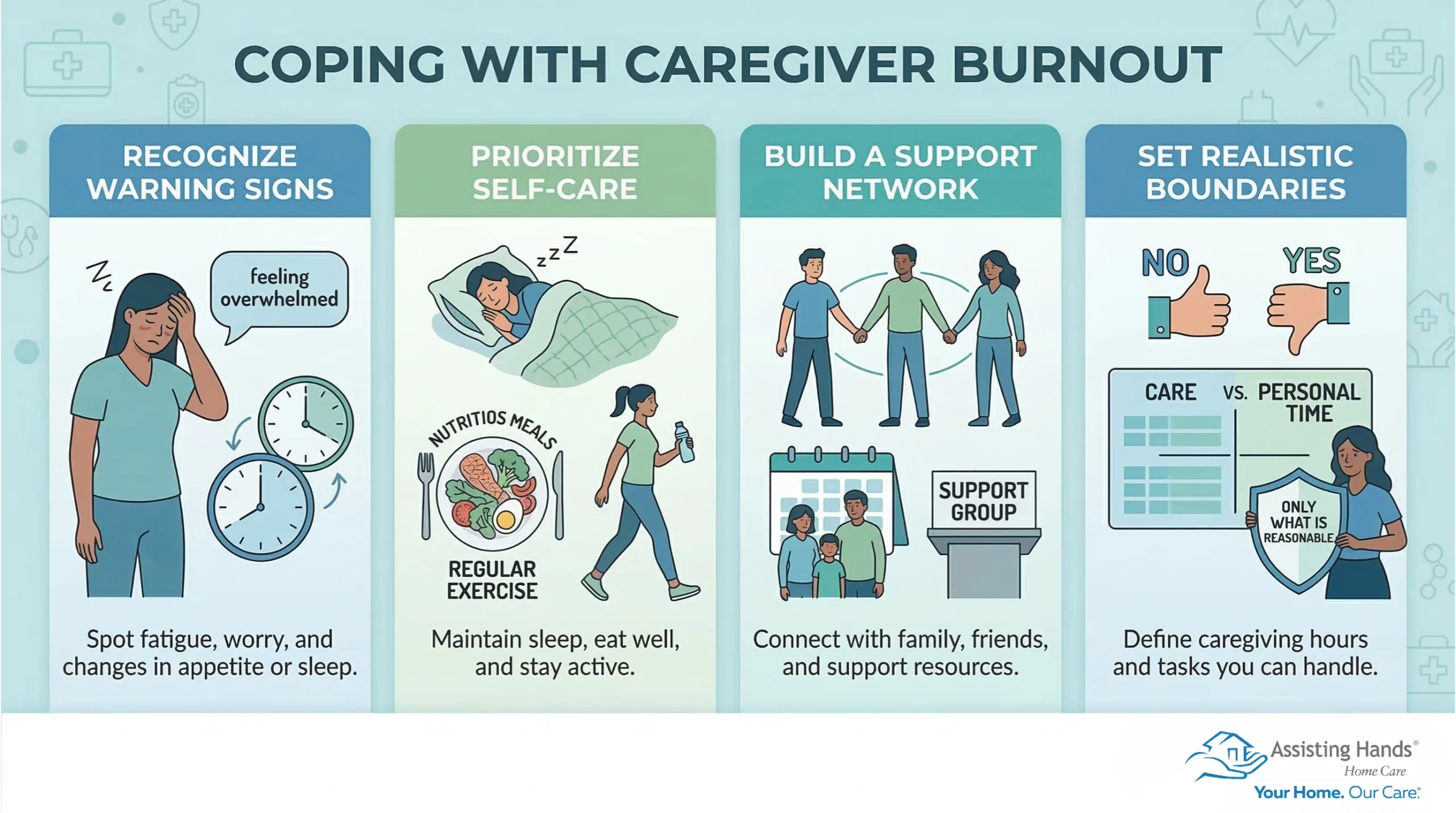
Prioritize Self-Care
Self-care isn’t selfish—it’s essential for sustainable caregiving. When you neglect your own needs, you become less effective at helping others.
Basic self-care strategies:
- Maintain a regular sleep schedule, aiming for 7–8 hours nightly.
- Eat nutritious meals at regular intervals.Exercise regularly, even if it’s just a 15-minute walk.
- Schedule regular medical checkups for yourself.
Mental health maintenance:
- Practice relaxation techniques like deep breathing or meditation.
- Keep a journal to process your emotions.
- Stay connected with friends and family outside your caregiving role.
- Consider professional counseling if needed.
Family caregivers need to care for their own wellbeing. If you’re caring for an aging loved one in Frederick and are feeling overwhelmed, consider hiring a professional caregiver to provide respite care. Frederick families who want to prevent burnout can turn to Assisting Hands Home Care. One of our professional caregivers can assist your loved one at home while you take a nap, go to work, run errands, or go on vacation.
Build a Support Network
No one should handle caregiving alone. Creating a strong support system distributes the workload and provides emotional backup when you need it most.
Family and friends:
- Have honest conversations about what help you need.
- Create a schedule so different people can assist on different days.
- Ask specific people to handle specific tasks (grocery shopping, medical appointments, etc.).
Professional resources:
- Contact local caregiver support groups.
- Explore adult day programs for your loved one.
- Connect with social workers who specialize in elder or disability care.
- Look into respite care services in your area.
Set Realistic Boundaries
Effective caregiving requires clear limits on what you can and cannot do. Setting boundaries protects both you and your loved one from the consequences of caregiver burnout.
Time boundaries:
- Designate specific hours for caregiving versus personal time.
- Schedule regular breaks throughout the day.
- Plan periodic longer breaks (weekends or vacations).
Task boundaries:
- Identify which tasks you can reasonably handle alone.
- Determine when to seek professional help (medical care, physical therapy, etc.).
- Learn to say no to additional responsibilities when you’re already stretched thin.
Know When to Seek Professional Help
Sometimes caregiver burnout requires intervention beyond self-help strategies. Recognizing when you need professional support can prevent a crisis.
Signs you need immediate help:
- Persistent thoughts of harming yourself or your loved one
- Complete inability to sleep or eat
- Substance abuse as a coping mechanism
- Total withdrawal from social connections
Professional resources to consider:
- Therapists who specialize in caregiver stress
- Support groups led by trained facilitators
- Case managers who can coordinate additional services
- Respite care providers for temporary relief
Managing caregiver burnout requires ongoing attention and adjustment. Remember asking for help demonstrates strength, not weakness, and that taking care of yourself ultimately benefits everyone involved in the caregiving situation.
Living independently is important for seniors who want to maintain a high quality of life. For some, this simply means receiving help with tasks that have become more challenging to manage over time. However, those living with serious illnesses may need more extensive assistance. Luckily, there is professional live-in care Frederick seniors can rely on. Home can be a safer and more comfortable place for your loved one to live with the help of an expertly trained and dedicated around-the-clock caregiver. Call Assisting Hands Home Care to learn more about our flexible and customizable senior care plans.