
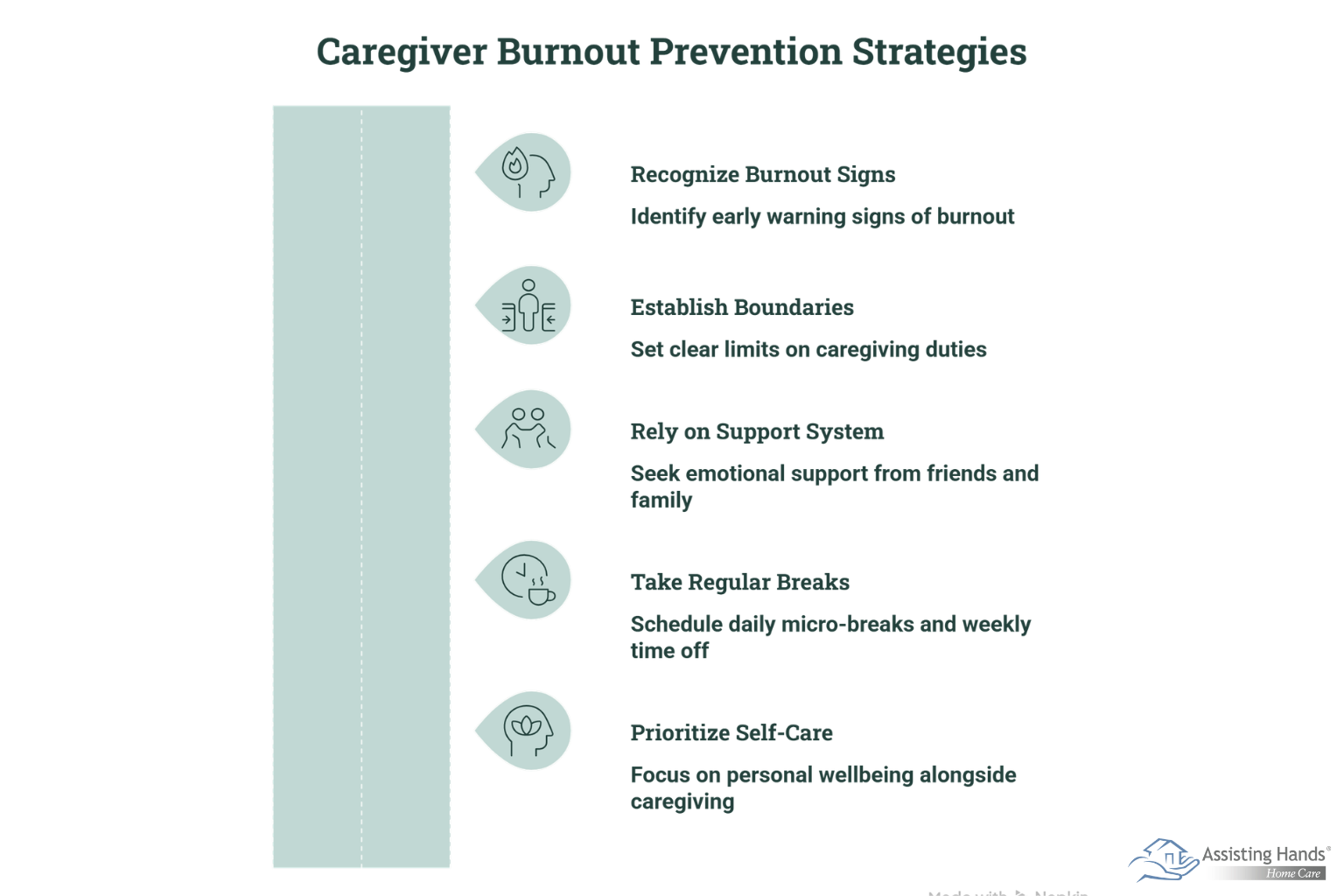
You can prevent burnout while providing dementia care by establishing clear boundaries, relying on a personal support system, and taking regular breaks away from caregiving duties. Balancing the physical and emotional demands of this role requires intentional habits to protect your own wellbeing. By prioritizing yourself alongside your senior loved one, you ensure sustainable and compassionate care over the long term.
What Are the Common Signs of Caregiver Burnout?
Caregiver burnout often reveals itself through persistent physical exhaustion, emotional numbness, or a deep sense of resentment toward everyday responsibilities. Recognizing these early warning signs is the essential first step toward making necessary adjustments to your daily routine.
- Constant fatigue or disrupted sleep patterns
- Withdrawing from friends and social activities
- Loss of interest in hobbies you previously enjoyed
- Changes in appetite or weight
Caring for seniors with dementia can be challenging for family caregivers. Luckily, there is high-quality dementia home care available for Frederick seniors and their families. Professional dementia caregivers help seniors with dementia stay safe and comfortable at home by preventing wandering, providing cognitive stimulation, and assisting with household chores.
How Often Should I Take Breaks from Caregiving Duties?
You should aim for daily micro-breaks and schedule longer periods of personal time at least once a week. Stepping away from your daily tasks allows your mind and body to recharge, ensuring you can return to your loved one with a clearer, more patient mindset.
- Read a book or listen to an audiobook for twenty minutes.
- Take a brief walk around your neighborhood.
- Engage in a favorite creative hobby.
- Dedicate time specifically for catching up on sleep.
Who Can I Turn to for Emotional Support?
Friends, family members, and local community groups provide vital emotional outlets when you feel overwhelmed by your daily tasks. Connecting with others who understand your specific situation can significantly reduce feelings of isolation.
- Join online or in-person caregiver community forums.
- Schedule regular phone calls or coffee dates with close friends.
- Ask trusted family members to take over specific daily chores.
- Share your feelings honestly with someone who listens without judgment.
One of the most challenging tasks of helping an elderly relative age in place safely and comfortably is researching agencies that provide home care. Families can turn to Assisting Hands Home Care for reliable, high-quality Frederick elderly home care for aging adults. We offer 24-hour care for seniors who require extensive assistance, and we also offer respite care for family caregivers who need a break from their caregiving duties.
Why Is Setting Boundaries Crucial for My Wellbeing?
Setting clear boundaries prevents caregiving from entirely consuming your identity and personal time. Knowing your limits ensures you don’t overextend yourself physically or emotionally on a daily basis. By establishing specific hours when you focus solely on your own needs and communicating these limits clearly to other family members, you create a healthier environment for both yourself and your loved one.
Family caregivers need to care for their own wellbeing. If you’re caring for an aging loved one and are feeling overwhelmed, consider hiring a professional caregiver to prevent burnout. The respite and overnight home care experts from Frederick Assisting Hands Home Care are available on an as-needed basis, giving your family peace of mind that your loved one will remain safe and comfortable while you relax or focus on other important responsibilities. One of our professional caregivers can assist your loved one at home while you take a nap, go to work, run errands, or go on vacation. Rely on the professionals at Assisting Hands Home Care to provide high-quality compassionate care for your loved one. Give us a call today to learn about our flexible in-home care plans
Frequently Asked Questions
How do I know if I’m stressed or actually burned out?
+
Stress usually feels like you have too much to do, while burnout feels like you have nothing left to give. If you feel deeply exhausted, unmotivated, and detached from your loved one, you’re likely experiencing burnout.
What are some quick ways to relieve stress during the day?
+
Practicing deep breathing exercises, listening to calming music, or simply stepping outside for five minutes of fresh air can instantly lower your stress levels. Finding small moments of peace can break up the intensity of a demanding day.
Is it normal to feel guilty about wanting time away?
+
Feeling guilty is incredibly common, but taking time away is actually essential for being a reliable and compassionate caregiver. Remind yourself that you cannot pour from an empty cup and personal time directly replenishes your energy.
Can I take a vacation while caring for someone with dementia?
+
Yes. Taking a vacation is highly encouraged to maintain your mental and emotional health. You can arrange for trusted family members or professional in-home respite care to take over your duties temporarily while you rest