
Hydration challenges in dementia care arise because individuals often lose their natural sense of thirst or forget how to drink, but these hurdles can be overcome through practical strategies like offering water-rich foods and high-contrast visual cues. Maintaining adequate fluid intake is essential to prevent increased confusion, physical setbacks, and other preventable health issues. Implementing simple engaging daily routines ensures individuals living with cognitive impairment stay safely hydrated.
Why Do Individuals with Dementia Forget to Drink?
People living with dementia often experience physical changes in the brain that diminish their natural thirst mechanism, meaning they simply don’t feel thirsty. Additionally, they may forget what a cup is used for, lose the ability to verbally express their need for water, or become easily distracted and overwhelmed during mealtimes.
Dehydration is just one of the many health issues older adults in north-central Maryland are susceptible to. Seniors can face a variety of challenges as they age, many of which can be mitigated with the help of professional in-home caregivers who provide high-quality Frederick senior care. Families trust Assisting Hands Home Care to help their elderly loved ones age in place safely and comfortably.
What Are the Signs of Dehydration in Cognitive Decline?
Recognizing dehydration early is crucial for maintaining your loved one’s daily comfort and overall wellbeing. Look out for the following warning signs:
- Increased confusion, agitation, or sudden behavioral changes
- Dark-colored urine or infrequent urination
- Dry mouth, cracked lips, and sunken eyes
- Extreme fatigue, sluggishness, or dizziness
How Can Caregivers Encourage Regular Fluid Intake?
Caregivers can use environmental cues and behavioral strategies to make drinking easier and more appealing throughout the day.
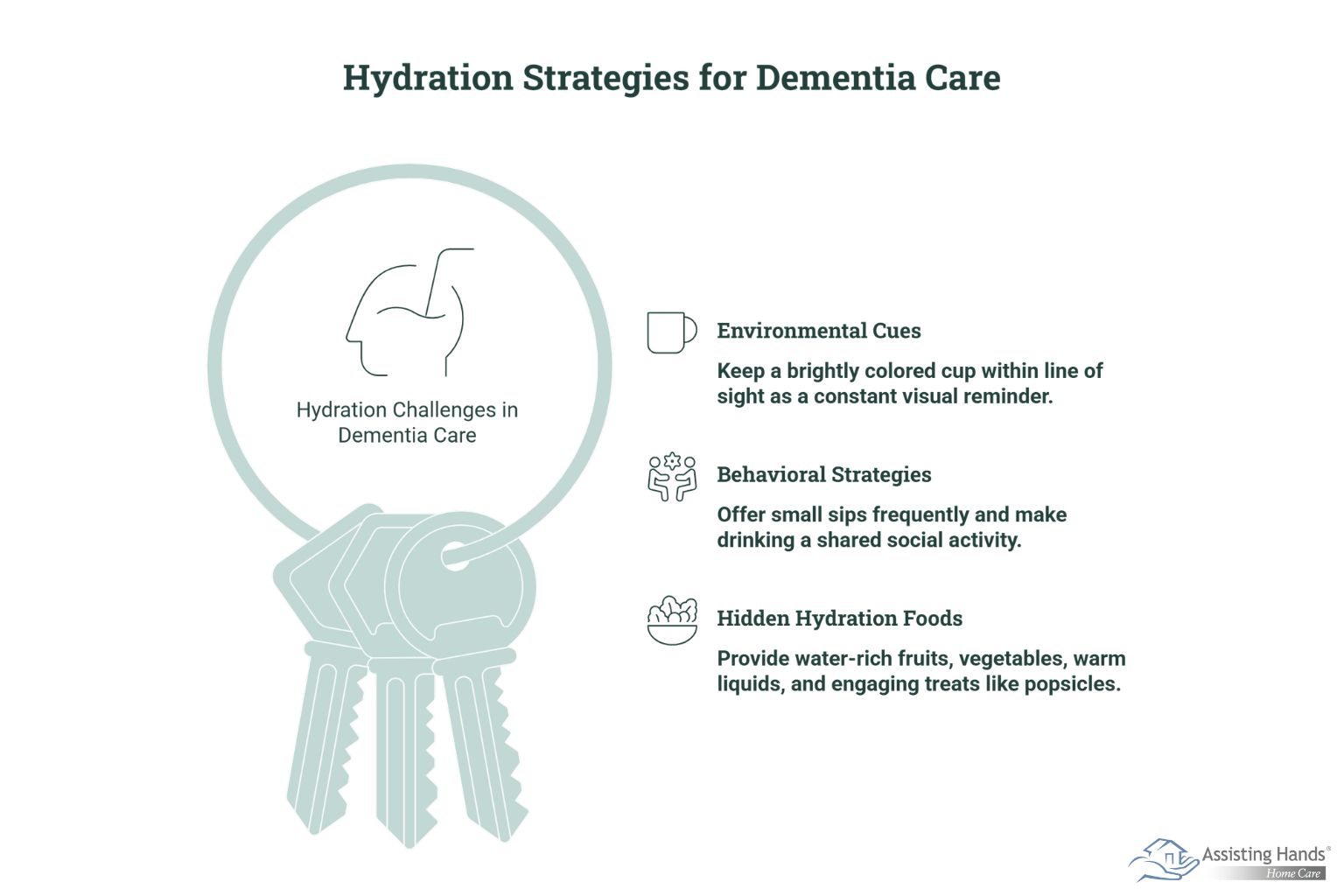
- Keep a brightly colored cup within your loved one’s line of sight at all times to serve as a constant visual reminder.
- Offer small sips of liquids frequently rather than presenting large, intimidating glasses of water.
- Make drinking a shared social activity by enjoying a beverage together and mirroring the physical motion of taking a sip.
A trained professional caregiver with experience in caring for seniors with dementia can be a great asset for you and your loved one. Certain age-related conditions can make it more challenging for seniors to age in place safely and comfortably, but 24-hour home care experts are available around the clock to help Frederick seniors manage their health. Whether your loved one is living with dementia or recovering from a stroke, you can trust the professional caregivers from Assisting Hands Home Care to enhance his or her quality of life. At Assisting Hands Home Care, we take measures to help seniors prevent illness and injury by assisting with exercise and mobility, preparing nutritious meals, helping with bathing and other personal hygiene tasks, and much more.
Which Foods Provide the Best Hidden Hydration?
Fluids don’t only have to come from a traditional glass of water. Many everyday foods are packed with hidden moisture that significantly contributes to daily hydration goals:
- Fresh juicy fruits like watermelon, grapes, oranges, and berries
- High-water vegetables such as cucumbers, celery, and tomatoes
- Warm liquids like soups, broths, and mild stews
- Engaging treats such as popsicles, gelatin, applesauce, and smoothies
To ensure your loved one is staying hydrated, consider hiring a professional caregiver. Aging in place can present a few challenges for seniors living with dementia. However, with professional dementia home care that offers Frederick families peace of mind, they can still live independently at home. Families can rely on Assisting Hands Home Care to provide their elderly loved ones with mental and social stimulation, timely medication reminders, assistance with meal prep, and much more. Our caregivers are available around the clock to help your loved one live a happier and healthier life. To hire a professionally trained caregiver for your loved one, call us today.
Frequently Asked Questions
Does caffeine count toward daily hydration goals?
+
Moderate amounts of tea and coffee can contribute to overall fluid intake, especially if it’s a beverage your loved one enjoys. However, water and caffeine-free alternatives are always the most effective choices for sustained daily hydration.
How much fluid should someone with dementia drink daily?
+
While individual needs vary based on age, weight, and environment, a general goal is offering around six to eight glasses of hydrating fluids or water-rich foods daily.
What if my loved one refuses to drink plain water?
+
If plain water is rejected, try enhancing the flavor with a splash of fruit juice, fruit drops, or fresh slices of lemon and cucumber. Offering sweet or savory alternatives like warm broth, herbal iced teas, and sports drinks can also be highly effective.
Can the color of a drinking cup really make a difference?
+
Yes, using brightly colored cups, especially red or bright blue, creates high visual contrast against standard tables and plates. This makes it much easier for individuals with visual processing issues or cognitive decline to recognize the cup and remember to drink.