
Managing medications can be one of the most critical responsibilities for a caregiver. Ensuring your senior loved one takes the right medicine at the right time is essential for his or her health and wellbeing. This guide offers practical tips to help you manage medications safely and effectively.
Keep an Updated Medication List
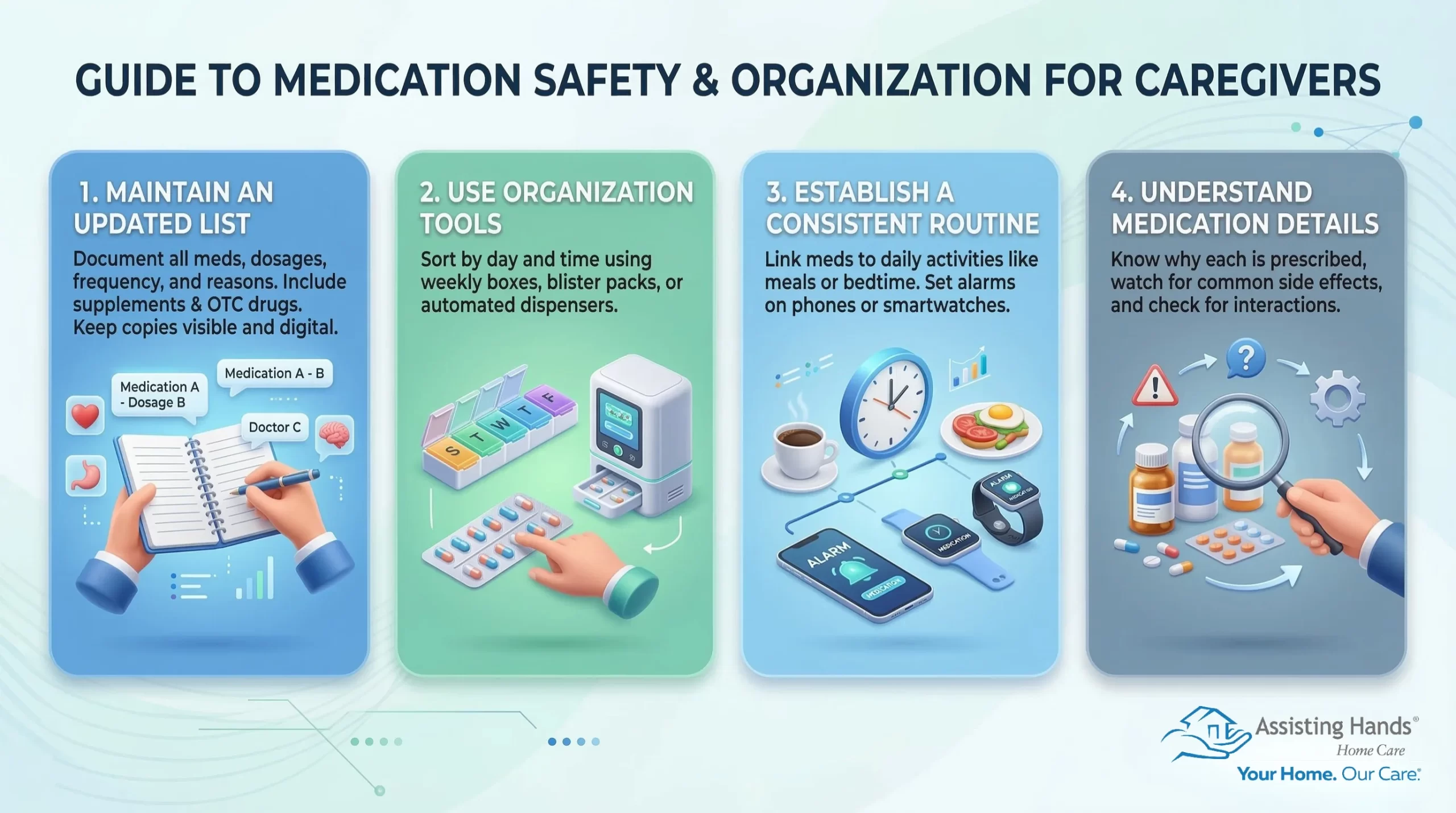
Maintaining an accurate and detailed list of all medications is the first step toward safe management. This list serves as a central point of reference for you, healthcare providers, and emergency personnel.
- Document everything – Your list should include the name of each medication, the dosage, how often it’s taken, and the reason for taking it. Also, note the prescribing doctor for each one.
- Include all substances – Remember to list over-the-counter drugs, vitamins, supplements, and herbal remedies, as these can interact with prescription medications.
- Keep it accessible – Store a copy in a visible, easy-to-find place at home, and carry another copy with you to all doctor’s appointments. Digital versions on a smartphone can also be very useful.
Use Pill Organizers and Dispensing Tools
Organizing medications can prevent confusion and reduce the risk of missed or double doses. Various tools are available to make this process simpler and more reliable.
- Weekly pill boxes – A simple pill organizer, sorted by day and time (morning, noon, evening, night), is a great starting point. Fill it at the beginning of each week to streamline the daily routine.
- Blister packs – Ask your pharmacy if they can package medications in blister packs. These packs group pills by the time they need to be taken, which can eliminate the need for manual sorting.
- Automated pill dispensers – For more complex schedules or for individuals with cognitive impairments, an automated dispenser can be a lifesaver. These devices can be programmed to release the correct pills at the set time, often with an alarm or notification.
These tools can be especially helpful if you’re caring for a loved one with cognitive decline due to dementia. Aging in place can present a few challenges for seniors living with dementia. However, with professional dementia care that offers Frederick families peace of mind, they can still live independently at home. Families can rely on Assisting Hands Home Care to provide their elderly loved ones with mental and social stimulation, timely medication reminders, assistance with meal prep, and much more. Our caregivers are available around the clock to help your loved one live a happier and healthier life.
Establish a Consistent Routine
A predictable daily routine ensures medications are taken on schedule. Consistency is key, especially when managing multiple prescriptions with different timing requirements.
- Link medication to daily activities – Medications should be taken at the same time as other regular events, such as meals or bedtime. For example, “Take the morning pills with breakfast.”
- Set reminders – Use alarms on a clock, phone, or smartwatch to create reminders for each medication time. There are also specialized medication reminder apps that can send notifications to your phone.
- Create a chart – A simple wall chart where you can check off each dose as it’s given provides a visual confirmation and prevents errors.
Assisting with medication reminders can be a challenging task for overworked caregivers. Frederick families who find it difficult to care for their aging loved ones without assistance can benefit greatly from professional respite care. Family caregivers who need a break from their caregiving duties can turn to Assisting Hands Home Care. Our caregivers can encourage your loved one to eat well, exercise regularly, get plenty of mental and social stimulation, and focus on other lifestyle factors that promote longevity.
Understand Each Medication’s Purpose and Side Effects
Being well-informed about each medication is crucial for safety and recognizing potential problems. Don’t hesitate to ask questions when speaking with doctors and pharmacists.
- Know the “why” – Understand why each medication is prescribed. This knowledge can reinforce the importance of taking it as directed.
- Be aware of side effects – Ask the pharmacist about common side effects. Knowing what to watch for will help you identify adverse reactions quickly.
- Learn about interactions – Inquire about potential interactions with other medications, foods, or supplements. For instance, some medications shouldn’t be taken with grapefruit juice, while others need to be taken on an empty stomach.
If your senior loved one has been diagnosed with a serious condition and needs help with tasks like meal prep, transportation, medication reminders, bathing, and grooming, reach out to Assisting Hands Home Care, a leading provider of home care frederick families can trust. We also offer comprehensive care for seniors with dementia, Alzheimer’s, and Parkinson’s. To create a comprehensive in-home care plan for your loved one, call us today.