
Caring for an aging parent, a loved one with dementia, or someone with a chronic illness can be deeply meaningful, but it’s also physically, mentally, and emotionally demanding. Many family caregivers put their own needs aside, believing they must manage everything on their own. Over time, this constant responsibility can lead to exhaustion, stress, and burnout.
Temporary support services exist to help caregivers recharge while ensuring their loved one continues to receive proper care. Below are 10 common and important scenarios where taking a break isn’t only helpful but also necessary for long-term wellbeing.
To Prevent Caregiver Burnout
Caregiver burnout develops gradually. Long hours, interrupted sleep, emotional strain, and lack of personal time can leave caregivers feeling drained, irritable, and overwhelmed. Burnout can negatively affect both physical health and emotional balance.
Planned breaks allow you to rest, reset, and return to your role with renewed energy. Taking time off isn’t selfish. It’s essential for maintaining consistent and compassionate care.
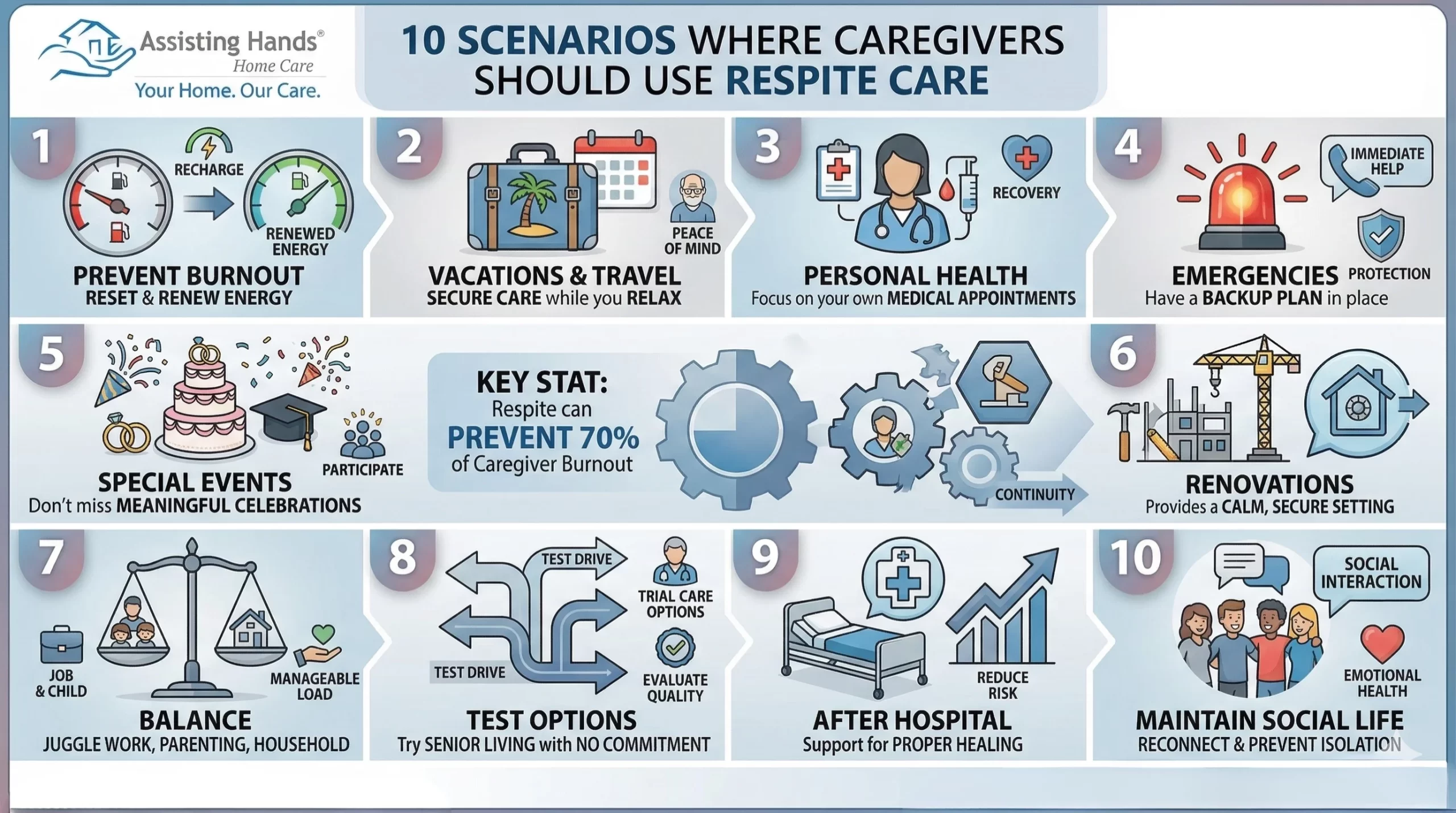
During Vacations or Travel
Caregivers also deserve time away. Whether it’s a short trip, a family vacation, or visiting relatives, travel can feel impossible when you’re responsible for someone’s daily care.
Temporary support ensures your loved one remains safe, supervised, and comfortable while you’re away. Knowing your loved one is in capable hands allows you to truly relax and enjoy your time off.
For Personal Health Needs
Caregivers often delay their own medical appointments, treatments, or recovery because they feel they cannot step away. This can lead to worsening health conditions and long-term consequences.
When you’re sick, injured, or attending medical appointments, having reliable support ensures uninterrupted care for your loved one while allowing you to focus on your own health.
In Case of Emergencies
Life is unpredictable. Sudden illness, accidents, or family emergencies can arise without warning. In these moments, caregivers may not have the time or ability to arrange immediate help.
Having a plan for temporary backup support ensures your loved one is protected even during unexpected situations. Emergency coverage provides peace of mind when life takes an unexpected turn.
To Attend Special Events
Important life events such as weddings, graduations, religious gatherings, or milestone celebrations are moments caregivers shouldn’t have to miss.
Short-term care arrangements allow you to fully participate in these meaningful occasions without worry. Taking part in joyful events also supports emotional wellbeing and helps you maintain personal identity beyond your caregiving role.
During Home Renovations or Moving
Home renovations, repairs, or moving can create loud, chaotic, and unsafe environments, especially for seniors or individuals with cognitive or mobility challenges.
Temporary care services provide a calm and secure setting while the home environment is disrupted. This prevents accidents, reduces anxiety, and ensures continuity of routine during transitions.
To Balance Other Responsibilities
Many caregivers juggle multiple roles, including employment, parenting, and managing household responsibilities. Trying to do everything at once can quickly become overwhelming.
Temporary caregiving support allows you to focus on work obligations, children, or personal responsibilities without compromising your loved one’s safety and care.
To Test Senior Living or Care Options
Some families consider assisted living or community-based care but feel unsure about making a permanent decision. A short-term stay provides an opportunity for seniors to experience a new environment without long-term commitment.
This “trial period” helps families evaluate care quality, staff support, activities, and overall comfort before making major decisions.
After Hospitalization or Medical Procedures
Recovery after surgery, illness, or hospitalization often requires more care than a family member can provide alone. Mobility limitations, medication schedules, and monitoring needs can be overwhelming.
Temporary skilled support during recovery ensures proper healing, reduces the risk of complications, and eases your workload during a critical time.
To Maintain Social Connections and Emotional Health
Caregiving can be isolating. Over time, caregivers may withdraw from friends, hobbies, and social activities, leading to loneliness and emotional fatigue.
Taking breaks allows you to reconnect with friends, attend social events, and maintain relationships. Social interaction is vital for mental health and can prevent feelings of isolation.
Why Home Care Plays an Important Role
In many communities, family caregivers rely on professional home care services as a practical extension of the support they already provide. When caregiving demands increase due to aging, illness, or recovery, having access to dependable local care becomes essential. Community-based home care allows families to arrange support quickly, adjust care schedules easily, and maintain continuity in familiar surroundings.
For those exploring trusted home care frederick options, this approach ensures care is not only personalized but also accessible, responsive, and aligned with local needs. By supporting daily routines at home, professional caregivers help preserve independence, reduce stress for families, and create a balanced caregiving environment that adapts as needs change.
How Respite Care Protects Caregiver Wellbeing
Respite care is designed to give caregivers temporary relief without compromising the quality of care. Whether for a few hours, days, or weeks, it allows caregivers to rest, recover, and return to their role with renewed strength and focus. Consistent breaks can prevent burnout and enhance long-term caregiving outcomes.
When Live-In Care Becomes a Practical Solution
In situations where ongoing supervision is required, live-in care offers continuous support from a dedicated caregiver living in the home. This option provides stability, safety, and routine for the care recipient while reducing stress and responsibility for family members.
Caring for a loved one is a journey filled with dedication and love, but no one should do it alone. Recognizing when to seek temporary support is a sign of strength, not weakness. Taking breaks helps caregivers protect their health, maintain balance, and continue providing the best possible care over time.