
Diabetes is a long-term health condition that affects how the body uses blood sugar (glucose). Glucose is the main source of energy for the body, but when diabetes develops, sugar stays in the bloodstream instead of being used properly. Over time, high blood sugar can damage organs, nerves, blood vessels, and the immune system.
Many people live with diabetes for years without realizing it because the warning signs often start slowly. Recognizing the early symptoms can help you get tested, start treatment sooner, and prevent serious complications. Below are the 12 most common warning signs of diabetes, explained in detail so you can understand what your body may be trying to tell you.
Frequent Urination (Polyuria)
One of the earliest and most common signs of diabetes is frequent urination. When blood sugar levels are too high, the kidneys try to remove the excess sugar by filtering it out through urine. This forces the kidneys to work harder than normal, producing more urine.
As a result, you may notice you need to use the bathroom more often, especially during the night. Waking up multiple times to urinate is a strong warning sign that shouldn’t be ignored. Over time, this can also lead to dehydration and weakness.
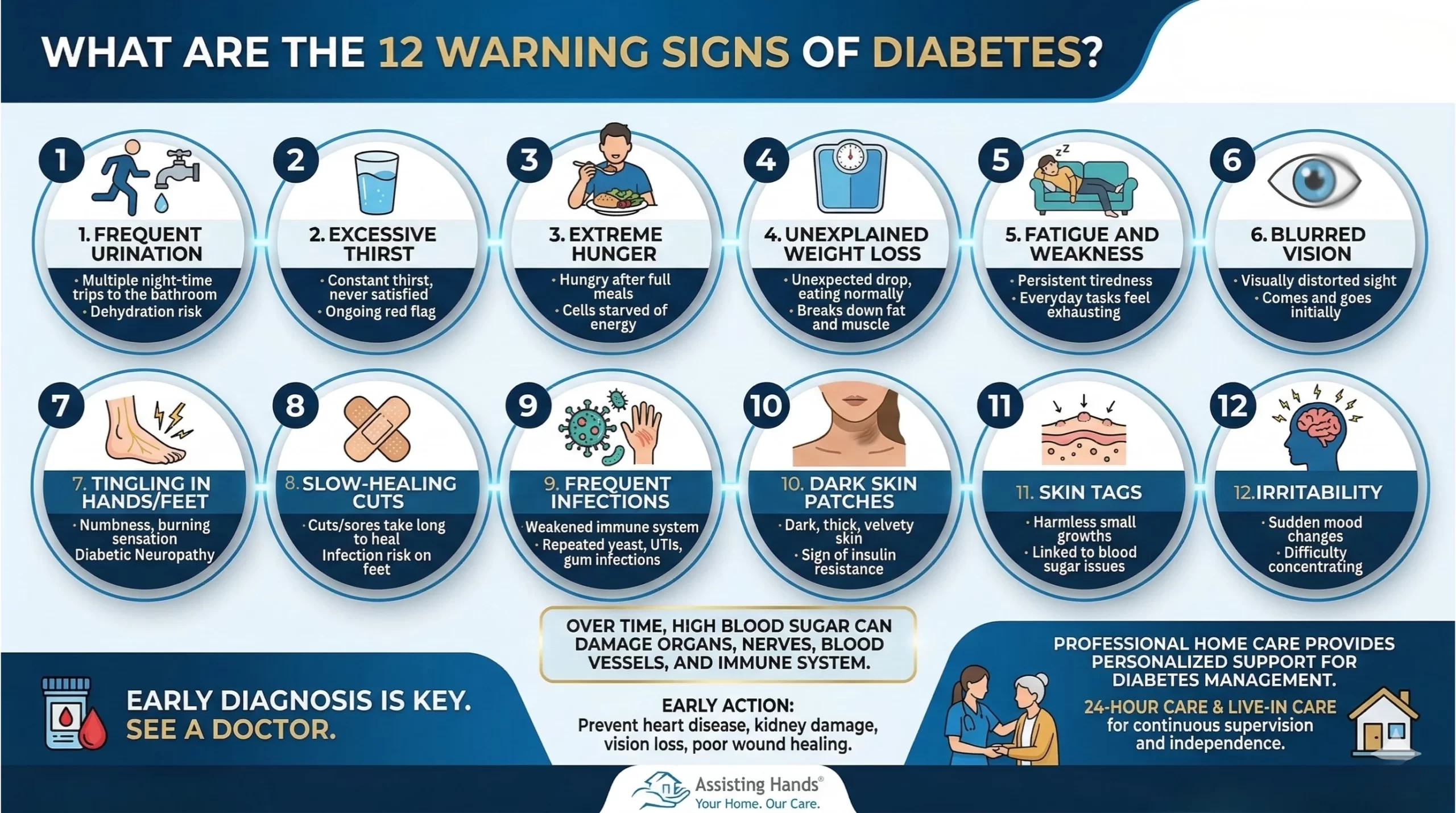
Excessive Thirst (Polydipsia)
Because frequent urination causes the body to lose a lot of fluids, constant thirst often follows. Even after drinking water, you may still feel dry or unsatisfied. This is your body’s way of trying to replace the lost fluids.
Persistent thirst that doesn’t subside with normal water intake can be a red flag for high blood sugar levels. Many people ignore this symptom, thinking it’s due to weather or physical activity, but ongoing thirst deserves medical attention.
Extreme Hunger (Polyphagia)
Diabetes can make you feel hungry even after eating a full meal. This happens because insulin isn’t working properly and glucose cannot enter the body’s cells to provide energy. When cells are starved of energy, the brain sends signals telling you to eat more.
This constant hunger can be confusing and frustrating. Despite eating more food, the body still feels unsatisfied because the sugar isn’t being used correctly for energy.
Unexplained Weight Loss
Unexpected weight loss is a concerning sign, especially when you’re eating normally or even more than usual. In diabetes, the body cannot use glucose properly, so it starts breaking down fat and muscle for energy instead.
This process leads to weight loss without effort. While some people may initially welcome weight loss, sudden and unexplained changes in body weight should always be checked by a doctor.
Fatigue and Weakness
Feeling tired all the time is another common symptom of diabetes. When glucose cannot enter cells, the body lacks the fuel it needs to function efficiently. As a result, everyday tasks may feel exhausting.
Fatigue caused by diabetes is often persistent and doesn’t improve with rest or sleep. High blood sugar can also cause dehydration, which further contributes to weakness and low energy levels.
Blurred Vision
High blood sugar levels can affect the small blood vessels in the eyes. Excess glucose causes fluid shifts that change the shape of the eye lens, leading to blurry or distorted vision.
This vision problem may come and go, especially in the early stages of diabetes. However, if blood sugar remains uncontrolled, long-term damage to the eyes can occur, increasing the risk of serious vision loss.
Tingling or Numbness in Hands and Feet (Neuropathy)
Prolonged high blood sugar can damage nerves, particularly in the hands and feet. This nerve damage is called diabetic neuropathy. People often describe it as tingling, burning, numbness, or a “pins and needles” sensation.
Neuropathy usually starts slowly but can worsen over time. If left untreated, it may lead to pain, loss of sensation, and increased risk of injuries that go unnoticed.
Slow-Healing Cuts and Wounds
If small cuts or sores take a long time to heal, it may be due to diabetes. High blood sugar affects blood circulation and reduces the body’s ability to repair itself.
Poor healing is especially noticeable on the feet and legs. Slow-healing wounds can become infected easily, increasing the risk of serious complications if diabetes isn’t properly managed.
Frequent Infections
People with diabetes are more prone to infections because high blood sugar weakens the immune system. Common infections include yeast infections, urinary tract infections (UTIs), gum infections, and skin infections.
These infections may occur more often, last longer, or be harder to treat. Repeated infections are often an early sign that blood sugar levels aren’t under control.
Dark Skin Patches (Acanthosis Nigricans)
Dark, thick, velvety patches of skin, usually found on the neck, underarms, elbows, or knees, can be a sign of insulin resistance. This condition is called acanthosis nigricans.
It’s more common in people with type 2 diabetes or those at risk of developing it. While the skin change itself isn’t harmful, it’s an important warning sign that shouldn’t be ignored.
Skin Tags
Skin tags are small, soft growths that often appear on the neck, eyelids, armpits, or groin. While they’re generally harmless, having many skin tags has been linked to insulin resistance.
An increase in skin tags may signal underlying blood sugar issues, especially when combined with other diabetes symptoms.
Irritability and Mood Changes
Blood sugar levels have a strong effect on the brain. When sugar levels rise or fall too quickly, it can lead to mood swings, irritability, anxiety, or difficulty concentrating.
People with undiagnosed diabetes may notice sudden changes in mood without understanding the cause. Stable blood sugar is important not only for physical health but also for emotional wellbeing.
Why Early Diagnosis Matters
Ignoring the warning signs of diabetes can lead to serious complications such as heart disease, kidney damage, nerve damage, vision loss, and poor wound healing. The good news is diabetes can be managed effectively with early diagnosis, lifestyle changes, medication, and regular monitoring.
If you or a loved one experiences several of these symptoms, it’s important to see a doctor for blood tests. Early action can greatly boost quality of life and reduce long-term health risks.
Why Home Care Is Important for People with Diabetes
Managing diabetes requires daily attention, including blood sugar monitoring, proper nutrition, medication management, and foot care. Many people, especially older adults, have difficulty handling all these tasks alone. Professional home care services provide personalized support, ensuring individuals follow their treatment plans safely while remaining comfortable in their own homes.
The Role of 24-Hour Care in Diabetes Management
Some people with diabetes face complications such as severe blood sugar swings, mobility issues, or cognitive challenges. In such cases, 24-hour care ensures continuous supervision and immediate response to emergencies like hypoglycemia or infections. This level of care offers peace of mind for both seniors and their families.
How Live-In Care Enhances Quality of Life
For individuals who need consistent assistance but want to avoid institutional settings, live-in care is an ideal solution. A dedicated caregiver lives in the home, helping with daily routines, medication reminders, meal preparation, and monitoring symptoms. This type of care promotes independence while ensuring safety and long-term health stability.
Diabetes often sends warning signs long before serious damage occurs. Understanding these symptoms and acting early can make a life-changing difference. Whether through medical treatment, lifestyle changes, or supportive care services, proper management helps individuals live healthier, safer, and more independent lives.