
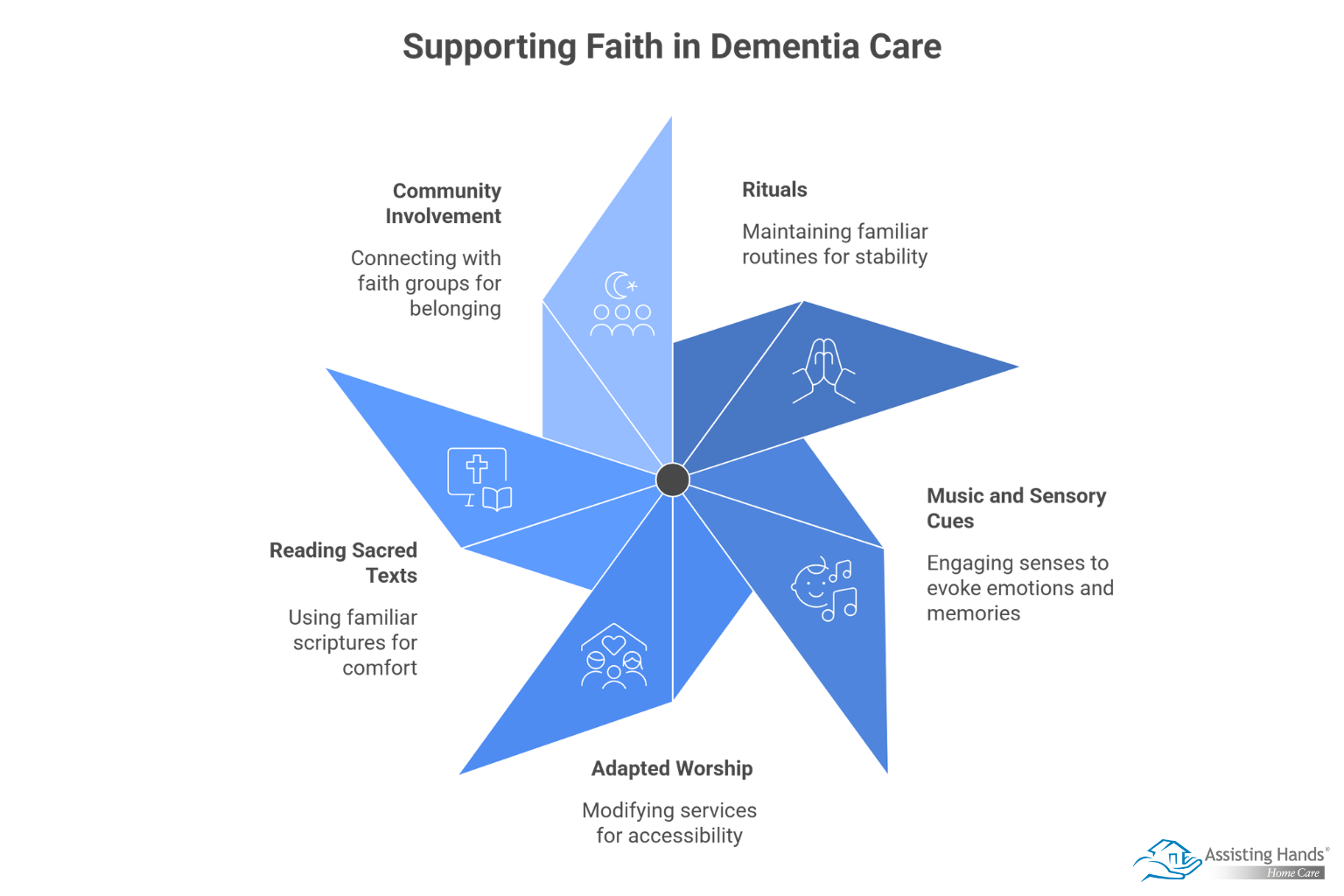
You can help someone receiving dementia care stay connected to faith or spirituality by maintaining familiar rituals, incorporating music and sensory cues, adapting worship experiences, reading sacred texts, and fostering community involvement. These approaches provide comfort, reinforce identity, and support emotional wellbeing as cognitive changes progress.
For many individuals, faith isn’t just a belief system but a fundamental part of their identities and histories. As dementia progresses, helping a senior loved one maintain a connection to his or her spirituality can offer immense comfort, reduce agitation, and provide a sense of continuity in a confusing world.
How Can Rituals Provide Comfort in Dementia Care?
Routine and ritual are powerful tools for those living with memory loss because they create stability and reassurance by drawing on long-term procedural memory. Even when short-term memory fades, the familiarity of ritualistic movements or habits often remains intact. Engaging in established spiritual practices can ground a person and provide a deep sense of safety.
To incorporate this into daily care, consider:
- Daily prayer or meditation – Establishing a specific time for prayer or quiet reflection can anchor the day and provide a sense of order.
- Lighting candles – If safe, the visual act of lighting a candle can signal the beginning of a holy time or a moment of peace.
- Dietary customs – Respecting religious dietary laws or traditions (like fasting periods, if health allows) helps seniors maintain their cultural and spiritual identities.
Supporting a loved one’s spiritual wellbeing is deeply meaningful, but family caregivers don’t have to manage every aspect of care alone. If you’re the primary caregiver for a senior family member and are looking for professional elder care in Frederick, Assisting Hands Home Care should be your top choice. Our dedicated and compassionate caregivers are committed to helping older adults manage their health and enjoy a higher quality of life in the golden years.
What’s the Role of Music and Sensory Cues?
Music and sensory cues can strengthen faith connections by reaching emotional memory centers that remain responsive even during cognitive decline. Spiritual experiences are rarely just intellectual. They’re multisensory, involving hearing, sight, sound, and touch. Music in particular is known to unlock memories and emotions even when language skills have diminished.
You can engage the senses through:
- Playing familiar hymns – Music from your loved one’s youth or regular worship services can trigger positive emotional responses and encourage him or her to sing along.
- Using tactile objects – Holding a rosary, a prayer shawl, a cross, or a familiar holy book can provide physical comfort and a tangible link to your loved one’s faith.
- Displaying visual symbols – Placing religious iconography, statues, or symbols in the living space serves as a constant visual reminder of your loved one’s beliefs.
How Can You Adapt Worship Services for Accessibility?
Worship services can be modified by reducing stimulation, shortening attendance, or bringing services into the home. Attending a full religious service might become overwhelming for someone with dementia due to noise, crowds, or the duration of the event. However, this doesn’t mean your loved one must be cut off from formal worship. Adapting the experience to your loved one’s current abilities is essential for keeping him or her connected without causing distress.
Consider these modifications:
- Stream services – Many places of worship now offer online streaming. This allows your loved one to watch a service from the comfort and quiet of home.
- Shorten the experience – If attending in person is important, consider going for only a portion of the service or arrive early to get settled before the congregation fills the space.
- Request home visits – Ask a clergy member or spiritual leader to visit the home for a brief private service, communion, or blessing.
As dementia progresses, balancing spiritual support with daily caregiving responsibilities can become physically and emotionally demanding. For some families, caring for a senior loved one can be overwhelming at times. Luckily, they can rely on professional respite care provided by the experienced professionals from Assisting Hands Home Care Frederick. We are a trusted name in respite and hourly care, and our caregivers are available around the clock to assist seniors with bathing, transportation, medication reminders, exercise, and much more, allowing families the time they need to focus on other important responsibilities or just take a break.
Why Is Reading Scripture and Sacred Texts Beneficial?
Reading sacred texts continues to offer comfort because familiar language patterns and spiritual themes often remain meaningful despite memory loss. While processing complex new information becomes difficult, the rhythm and cadence of familiar texts often stay with people for a long time. Reading aloud to your loved one can be a soothing shared activity that reinforces his or her spiritual connection and validates his or her history.
- Select favorite passages – Focus on texts your loved one has known for years, such as the 23rd Psalm, the Lord’s Prayer, or other foundational scriptures.
- Read with emotion – The tone of your voice conveys meaning and comfort even if the specific words aren’t fully understood.
- Encourage participation – If your loved one remembers a specific prayer or verse, encourage him or her to recite it along with you.
How Can the Community Support Spiritual Wellbeing?
A faith community can support ongoing spiritual wellbeing by reducing isolation and reinforcing a sense of belonging. Isolation is a significant risk for those with dementia, often leading to a faster decrease in wellbeing. Maintaining links to their faith communities reminds them that they’re still valued members of those groups, regardless of their cognitive status.
- Facilitate visits – Encourage friends from your loved one’s place of worship to visit, even if just for a short chat or to sit in silence.
- Include your loved one in news – Read newsletters or bulletins from your loved one’s congregation to keep him or her updated on community events and prayer lists.
- Join small groups – If a small prayer or study group meets locally, see if your loved one can sit in. Smaller groups are often less overstimulating and more personal than large services.
Frequently Asked Questions
What is dementia home care, and how does it support individuals?
Dementia home care provides specialized assistance with daily tasks, memory care, and creating a safe environment to enhance quality of life for individuals with dementia.
How do caregivers handle the unique challenges of dementia?
Caregivers are trained to manage behaviors like confusion, agitation, and wandering through techniques such as redirection, structured routines, and reassurance.
Can dementia home care be tailored to different stages of the condition?
Yes, care plans are personalized to address the specific needs and challenges of each stage of dementia, ensuring appropriate support.
What activities are included in dementia home care to promote wellbeing?
Activities may include memory exercises, music therapy, light physical activities, and social engagement to support cognitive and emotional health.
How do I choose the right dementia home care provider?
Look for providers with experience in dementia care, trained staff, and the ability to customize services to meet your loved one’s unique needs.
Maintaining faith connections is just one part of comprehensive dementia support at home. Aging in place can present a few challenges for seniors living with dementia. However, with professional dementia care that offers Frederick families peace of mind, they can still live independently at home. Families can rely on Assisting Hands Home Care to provide their elderly loved ones with mental and social stimulation, timely medication reminders, assistance with meal prep, and much more. Our caregivers are available around the clock to help your loved one live a happier and healthier life. To learn more about our premier in-home care plans, call us today.