
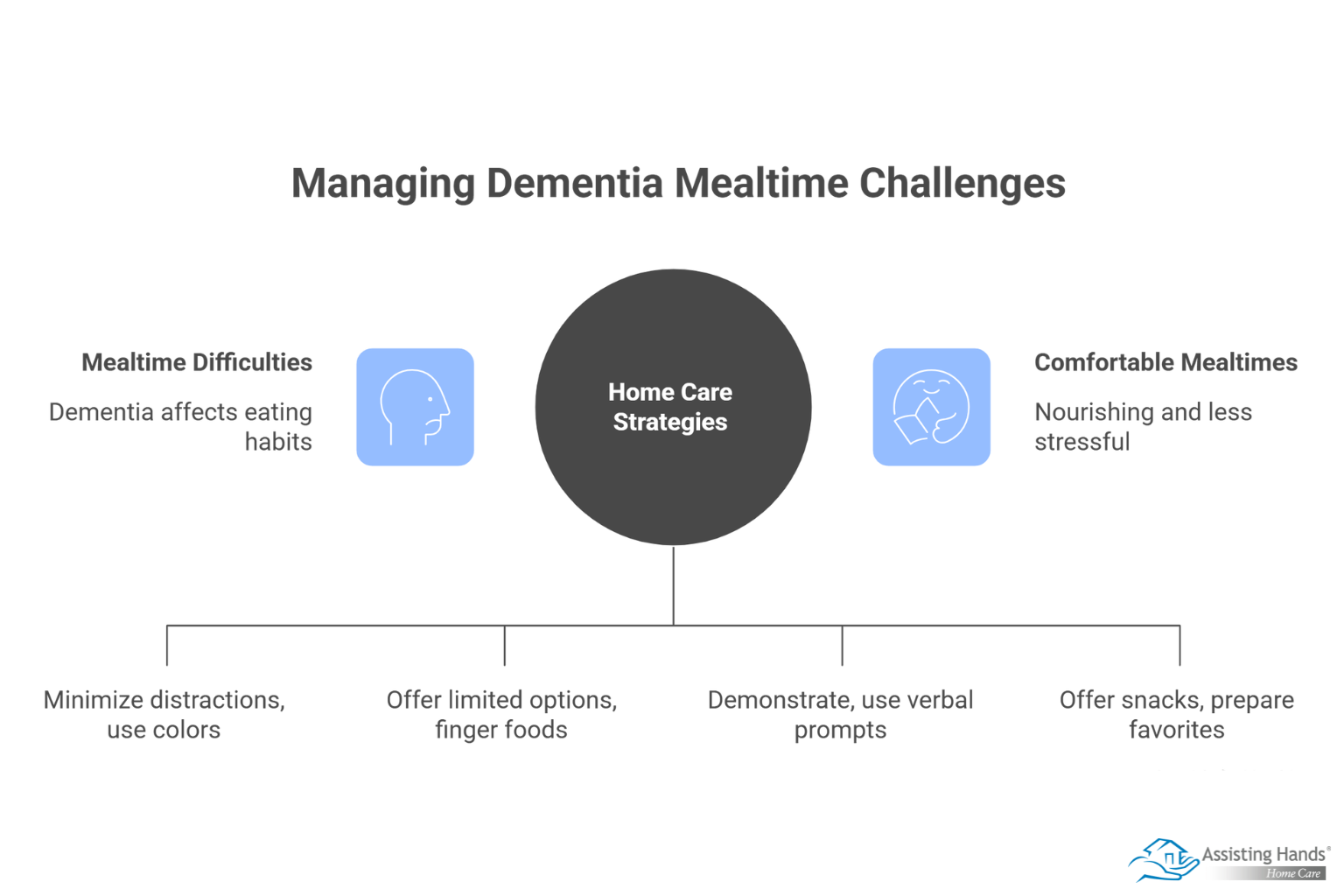
Home care can manage mealtime challenges for someone with dementia by creating structured routines, simplifying food choices, and providing hands-on support in a calm environment. Caregivers play a vital role in addressing behavioral changes, sensory sensitivities, and cognitive decline that affect eating habits. With the right strategies, mealtimes can become more comfortable and nourishing for individuals living with dementia.
Why Do People with Dementia Experience Mealtime Difficulties?
Dementia affects memory, judgment, and motor skills, which can make eating more complicated than it seems. People with dementia may forget how to use utensils, lose interest in food, or have difficulty communicating hunger and thirst. Sensory changes can also alter taste and smell, making once-favorite meals unappealing. Understanding these challenges helps caregivers tailor their approach to each individual’s needs.
What Are the Best Ways to Create a Calm Mealtime Environment?
A peaceful setting reduces confusion and helps your loved one focus on eating. Consider these strategies:
- Minimize distractions – Turn off the television and remove clutter from the table.
- Use contrasting colors – Serve food on plates that contrast with the table to distinguish items visually.
- Maintain consistent routines – Serve meals at the same time each day to build predictability.
- Adjust lighting – Ensure the dining area is well lit but not harsh or overstimulating.
Creating a soothing atmosphere encourages relaxation and can make mealtimes less stressful for everyone involved.
Caring for a loved one with dementia can be extremely challenging, and a compassionate professional caregiver can be a wonderful source of support. If your elderly loved one is living with a serious medical condition and needs help managing the tasks of daily living, reach out to Assisting Hands Home Care, a Frederick home care service agency you can trust. Our caregivers are available 24/7, there are no hidden fees in our contracts, and we offer a 100% satisfaction guarantee on all of our in-home care services.
How Can Caregivers Simplify Food Choices?
Too many options can overwhelm someone with dementia. Keeping meals straightforward can reduce decision fatigue and confusion:
- Offer one or two choices rather than an entire menu.
- Serve one course at a time to avoid visual clutter.
- Use finger foods when utensils become challenging to manage.
- Cut food into manageable bite-sized pieces.
These small adjustments make eating more intuitive and less frustrating.
Eating issues in the advanced stages of dementia can make caring for aging adults increasingly difficult. Certain age-related conditions can make it more challenging for older adults to age in place safely and comfortably, but experts in 24-hour home care for Frederick seniors are available around the clock to help aging adults manage their health. Whether your loved one is living with dementia or recovering from a stroke, you can trust the professional caregivers from Assisting Hands Home Care to enhance his or her quality of life.
What Role Does Hands-On Assistance Play?
Some individuals with dementia need gentle guidance to initiate or complete a meal. Caregivers can:
- Demonstrate eating by taking a bite themselves.
- Use verbal prompts like “Take a bite” or “Chew slowly.”
- Gently place utensils in your loved one’s hand or guide his or her hand to his or her mouth.
- Sit at eye level to maintain connection and offer reassurance.
Patience and encouragement go a long way toward helping someone feel supported without being rushed.
How Can Home Care Address Nutritional Concerns?
Maintaining proper nutrition becomes more difficult as dementia progresses. Home care providers can monitor food intake and work with healthcare professionals to address deficiencies. Strategies include:
- Offering nutrient-dense snacks throughout the day
- Preparing favorite foods to stimulate appetite
- Ensuring adequate hydration by offering water or other beverages regularly
- Consulting with a dietitian for personalized meal plans
Tracking eating patterns helps caregivers identify trends and intervene early when issues arise.
Even when families have the best intentions, caring for a senior loved one with dementia can be challenging. Fortunately, Assisting Hands Home Care is here to help. We are a leading provider of dementia home care for seniors in Frederick and nearby areas. You can take advantage of our flexible and customizable care plans, and our caregivers always stay up to date on the latest developments in senior care. Trust your loved one’s care to the professionals at Assisting Hands Home Care. Reach out to one of our compassionate Care Managers today.
Frequently Asked Questions
What should I do if my loved one refuses to eat?
+
Try offering smaller, more frequent meals or snacks instead of large portions. Sometimes a change in food texture or temperature can reignite interest.
How can I tell if someone with dementia is hungry?
+
Watch for nonverbal cues like restlessness, irritability, or reaching for food. Establishing regular mealtimes can also prevent hunger-related distress.
Are there specific foods that are easier for people with dementia to eat?
+
Soft foods like scrambled eggs, mashed potatoes, smoothies, and soups are easier to chew and swallow. Finger foods such as cheese cubes, fruit slices, and small sandwiches also work well.
What if my loved one forgets he or she already ate?
+
Gently redirect your loved one’s attention or offer a small, healthy snack. Avoid arguing, as this can cause frustration or confusion.
How can I prevent choking during meals?
+
Ensure your loved one is sitting upright, encourage slow eating, and avoid foods that are difficult to chew or swallow, such as nuts, raw vegetables, or tough meats.