
Helping children understand a grandparent’s dementia diagnosis involves explaining the condition in simple, honest language while offering reassurance and emotional support. By discussing behavior changes, encouraging open conversation, and finding new ways to connect, families can help children maintain a meaningful relationship with their grandparent while processing the emotional impact of cognitive decline.
Watching a loved one experience cognitive decline is heartbreaking, but explaining these changes to your own children presents a unique emotional challenge. By approaching the conversation with honesty and age-appropriate language, you can help your children navigate this transition while maintaining a loving bond with their grandparent.
How Can Parents Explain Dementia to Children in Simple Terms?
When discussing dementia with children, honesty is vital, but the depth of detail should depend on their age. Avoiding the truth can lead to confusion or fear that they’ve done something wrong. Start with a basic explanation of how the brain works and what happens when it gets sick.
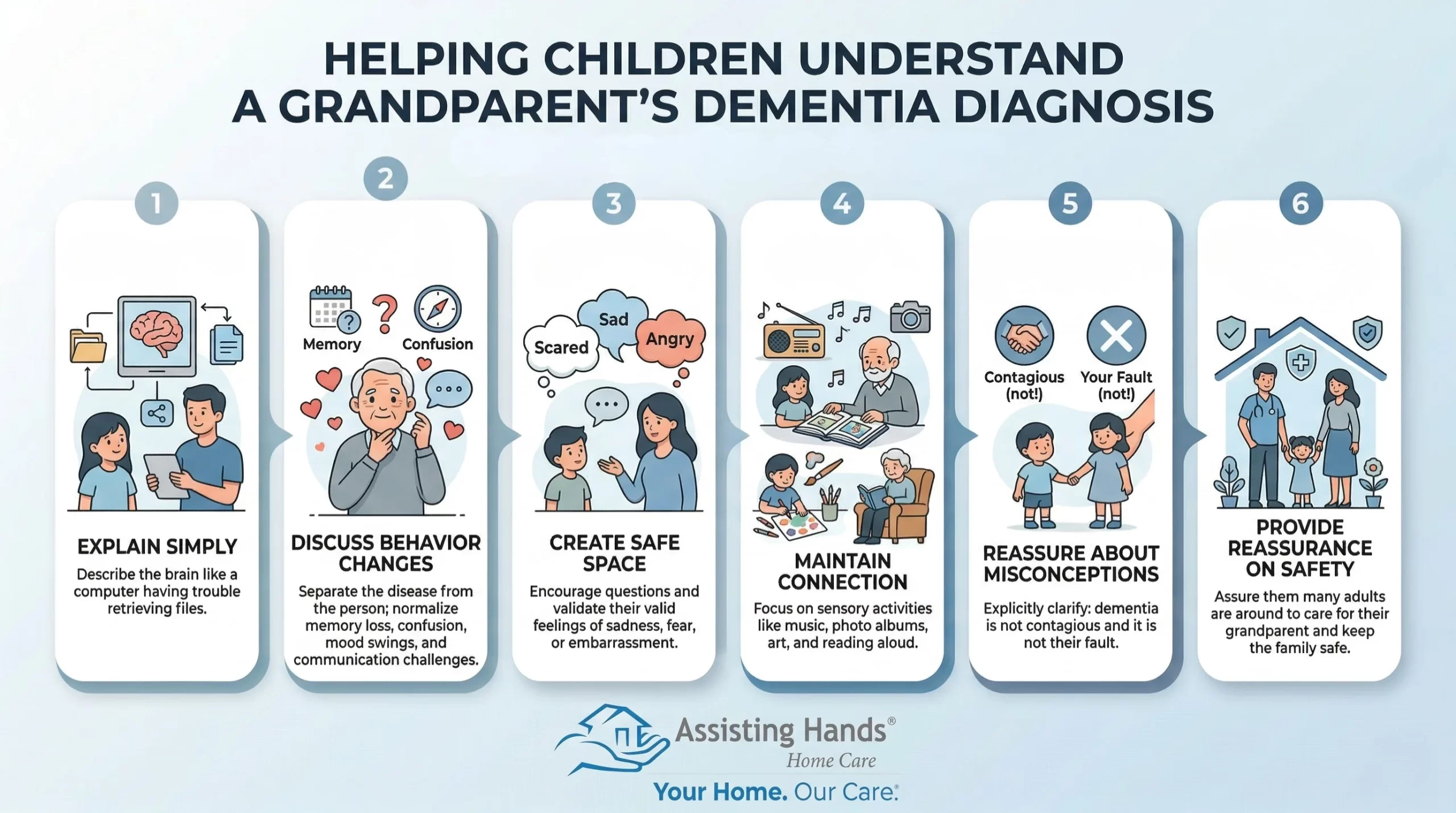
For younger children, simple analogies often work best to bridge the gap between medical facts and their understanding of the world. You might explain that the brain is like a computer that stores memories and instructions, and right now, Grandpa’s computer is having trouble retrieving files or sending messages to the rest of his body. For older children, you can use the correct medical terms, such as Alzheimer’s or dementia, explaining it’s a disease that physically changes the brain over time.
Consider hiring a professional caregiver if you need someone to provide care to your loved one. There are many reasons seniors might need assistance at home. Some may require regular mental stimulation due to a dementia diagnosis, while others might only need part-time assistance with exercise and basic household tasks. Assisting Hands Home Care is a leading Frederick at-home care provider. Families rely on our expertly trained caregivers to help their senior loved ones maintain a high quality of life.
Why Should You Talk Openly about Behavior Changes Children Notice?
Children are observant and will notice that their grandparent is acting differently long before a diagnosis is discussed. They may feel hurt if their grandparent forgets their names or becomes unusually irritable. It’s crucial to separate the disease from the person to help your children process these changes without taking them personally.
Explain that the “sickness” in the brain causes these behaviors and doesn’t reflect how much their grandparent loves them. You might list specific changes they can expect to see so they aren’t caught off guard:
- Memory loss – Their grandparent might repeat the same question or forget recent events.
- Confusion – Their grandparent might get lost in familiar places or have difficulty with names.
- Mood swings – Their grandparent might get angry, sad, or frustrated more easily than before.
- Communication challenges – Their grandparent might have trouble finding the right words to finish a sentence.
How Can Families Create a Safe Space for Feelings?
A dementia diagnosis affects the whole family, and children need to know their emotions are valid. They might feel sad, scared, embarrassed, or even angry their grandparent isn’t the same person they used to play with. Encourage them to ask questions and express these feelings without judgment.
Let them know it’s okay to miss the way things used to be. If they feel uncomfortable visiting, validate that feeling rather than forcing them to interact in ways that feel scary. You can say “I know it made you sad when Grandma didn’t remember your birthday. It made me sad, too.” Open dialogue prevents them from bottling up anxiety and helps them feel supported.
Your children may gain comfort from knowing their loved one is receiving the care he or she needs to live safely and comfortably at home. Some seniors only require help with a few daily tasks so they can maintain their independence. However, those living with serious illnesses may need more extensive assistance. Luckily, there is professional 24-hour care Frederick seniors can rely on. Home can be a safer and more comfortable place for your loved one to live with the help of an expertly trained and dedicated around-the-clock caregiver.
What Activities Help Children Maintain a Connection with a Grandparent?
Just because a grandparent has dementia doesn’t mean the relationship has to end. It just needs to evolve. Helping your children find new ways to connect can empower them and reduce the awkwardness of visits. Focus on activities that rely on sensory experiences or long-term memory, which often remains intact longer than short-term memory.
Guide your children toward low-stress activities that don’t require their grandparent to remember specific facts or details:
- Music – Listening to songs from their grandparent’s youth can be soothing and spark recognition.
- Photo albums – Looking at old pictures together allows their grandparent to share stories he or she can still access.
- Simple art – Coloring or painting together is a calming shared activity that requires no conversation.
- Read aloud – Having the child read a favorite book to the grandparent can be comforting for both.
How Can You Reassure Children about Safety and Misconceptions?
In the absence of clear information, children often create their own logic to explain scary situations. A common fear is that dementia is contagious, like the flu, and that they or their parents might “catch” it. Another common worry is that they caused the illness by being naughty or too loud.
Take time to explicitly reassure them on these specific points. Clear up misconceptions by stating clearly:
- It’s not contagious – You cannot catch dementia by hugging, kissing, or sharing a cup with Grandpa.
- It’s not their fault – Nothing they did or said caused this sickness.
- They’re safe – While Grandma is changing, plenty of adults are around to take care of her and keep the family safe.
An experienced dementia caregiver can be a wonderful source of information and support for your whole family.
Even when families have the best intentions, caring for a loved one with dementia can be challenging. Fortunately, Assisting Hands Home Care is here to help. We are a leading provider of dementia care for seniors in Frederick and nearby areas. You can take advantage of our flexible and customizable care plans, and our caregivers always stay up to date on the latest developments in senior care. To learn more about our reliable, compassionate in-home care services, contact us today.
Frequently Asked Questions
How do I choose the right dementia care option?
+
Consider your loved one’s care needs, preferences, and budget, and look for providers with experience, positive reviews, and a focus on personalized care.
Can dementia care services slow cognitive decline?
+
While they cannot stop the progression, dementia care services can provide cognitive stimulation and routines that help seniors maintain skills and a higher quality of life.
What should I expect from a dementia care provider?
+
You can expect trained professionals who offer compassionate care, engage in memory-enhancing activities, and address challenging behaviors with expertise.
How do dementia care services support daily living?
+
These services assist with tasks like meal preparation, personal hygiene, and medication reminders while creating a safe and structured environment.
What is dementia care, and who is it for?
+
Dementia care provides specialized support for individuals with memory loss, cognitive decline, and behavioral changes, tailored to their unique needs.