
Transitioning a senior loved one to in-home care services requires open communication, gradual implementation, and involving your loved one in decision-making to ensure comfort and acceptance. This process can feel overwhelming for families, but with the right approach, it becomes smoother for everyone involved. Here’s how to make the transition as seamless as possible.
Why Is Early Planning Important for In-Home Care?
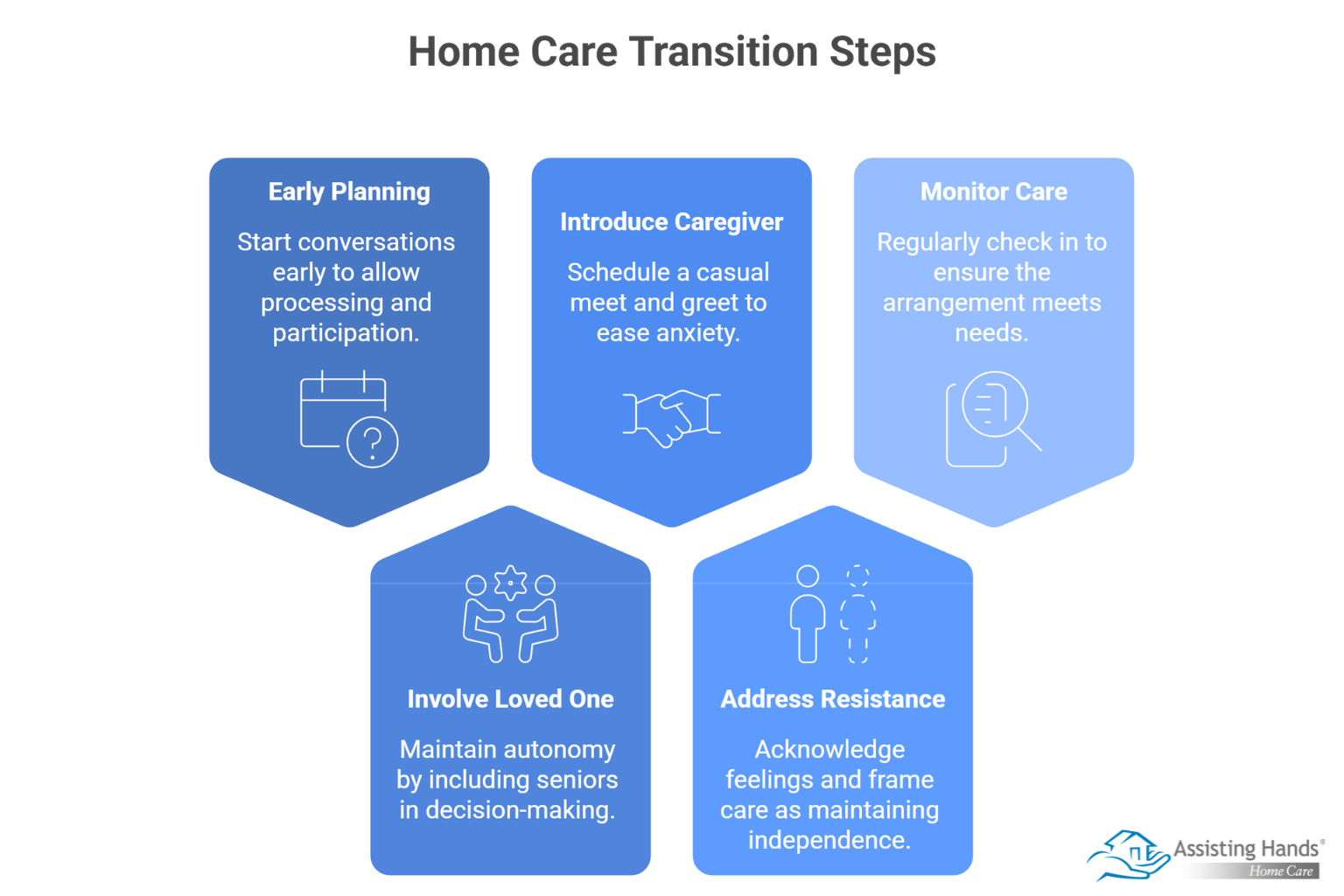
Starting the conversation early gives your loved one time to process the idea and participate in planning his or her care. Waiting until a crisis occurs can lead to rushed decisions and increased resistance.
Early planning allows you to:
- Research and compare different care providers
- Discuss preferences and concerns with your loved one
- Create a gradual transition plan rather than an abrupt change
- Address financial considerations and insurance coverage
- Establish trust between the caregiver and your loved one
Begin these discussions when you notice small changes in daily functioning rather than waiting for a serious health event.
Frederick home care experts are available to provide high-quality care to central Maryland seniors on an as-needed basis. From assistance with mobility and exercise to providing transportation to the doctor’s office and social events, there are a variety of ways professional caregivers can help your aging loved one continue to live independently.
How Can You Involve Your Loved One in the Decision-Making Process?
Maintaining autonomy is crucial for emotional wellbeing. When seniors feel included in decisions about their care, they’re more likely to accept help.
Involve your loved one by:
- Asking about his or her preferences for caregiver qualities (gender, age, personality)
- Letting him or her interview potential caregivers alongside you
- Allowing him or her to set the schedule for care visits initially
- Respecting his or her input about which tasks he or she wants help with
- Giving him or her veto power over caregivers who don’t feel like a good fit
This collaborative approach transforms the experience from something being done “to” your loved one into something he or she is actively shaping.
What Steps Should You Take to Introduce the Caregiver?
The first meeting between your loved one and the caregiver sets the tone for the entire relationship. A thoughtful introduction can ease anxiety and build rapport.
Consider these steps:
- Schedule the first visit as a casual “meet and greet” without care duties.
- Be present during initial visits to provide reassurance.
- Start with short visits and gradually increase duration.
- Have the caregiver focus on conversation and relationship building first.
- Create a written care plan everyone can reference.
- Establish a consistent schedule so your loved one knows what to expect.
Allow time for adjustment. It may take several visits before your loved one feels comfortable.
How Do You Address Resistance to In-Home Care?
Resistance is common and often stems from fear of losing independence, privacy concerns, or difficulty accepting the need for help. Address these concerns with empathy and patience.
Strategies to reduce resistance include:
- Acknowledging your loved one’s feelings without dismissing them
- Framing care as a way to maintain independence rather than lose it
- Starting with minimal assistance and increasing gradually
- Allowing your loved one to direct the caregiver’s activities when possible
- Sharing positive stories from others who’ve benefited from in-home care
- Offering a trial period to test the arrangement
If resistance continues, consider involving a trusted friend, doctor, or therapist who can provide an outside perspective your loved one might accept more readily.
Living independently is important for seniors who want to maintain a high quality of life. For some, this simply means receiving help with tasks that have become more challenging to manage over time. Even when families have the best intentions, they may not have the time to provide the care their elderly loved ones need and deserve. If your loved one needs help to age in place as independently as possible, reach out to Assisting Hands Home Care, a trusted provider of respite, live-in, and overnight care Frederick seniors can depend on.
What Should You Monitor after Care Begins?
The transition doesn’t end once care starts. Ongoing monitoring ensures the arrangement continues to meet your loved one’s needs and allows for adjustments.
Regular check-ins should assess:
- The quality of the relationship between caregiver and senior
- Whether care tasks are being completed as planned
- Any changes in your loved one’s physical or mental health
- Signs of caregiver burnout or compatibility issues
- Your loved one’s overall satisfaction with the arrangement
Schedule weekly conversations with both your loved one and the caregiver. Create an open feedback loop where concerns can be addressed promptly before they become major issues.
Whether you need respite from your caregiving duties or your aging loved one in Frederick needs 24-hour home care, Assisting Hands Home Care can meet your family’s care needs. Our dedicated caregivers are available around the clock to provide transportation to doctor’s appointments, ensure seniors take their prescribed medications, and help with a variety of tasks in and outside the home. To create a customized in-home care plan for your loved one, call us today.
Frequently Asked Questions
How long does it typically take for a senior to adjust to in-home care?
+
Most seniors adjust within 2 to 4 weeks, though this varies based on individual circumstances and the approach taken during the transition.
What if my loved one refuses to let the caregiver into the home?
+
Respect your loved one’s autonomy while continuing gentle conversations about safety and wellbeing. Consider consulting with a doctor or a geriatric care manager for additional support.
Should family members be present during care visits?
+
Initially, yes—your presence can provide comfort. However, gradually stepping back allows your loved one and the caregiver to develop their own relationship and routine.
How do I know if the caregiver is a good fit?
+
Look for signs your loved one seems relaxed and engaged, the caregiver follows the care plan consistently, and communication remains open between all parties.
Can we change caregivers if it’s not working out?
+
Absolutely. Most agencies allow caregiver changes, and finding the right match is essential for successful long-term care.